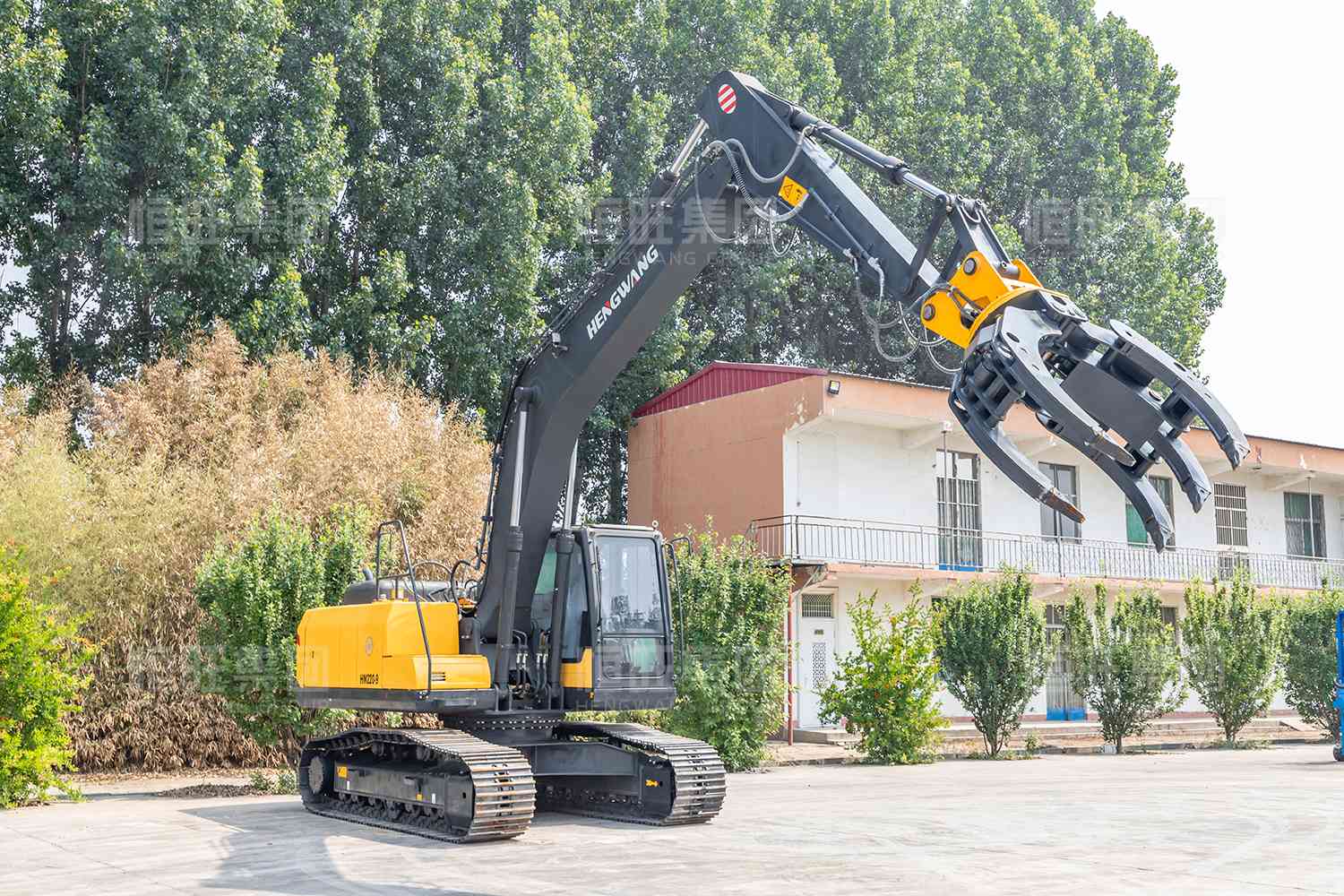
As a representative attachment for expanding the capabilities of excavators, excavator grapples are revolutionizing wood - handling workflows through specialized modification technologies. Leveraging hydraulic power as the core operating principle, these grapples enable excavators to grasp, clamp, and transport long - shaped materials (such as logs, reeds, and straw) without disrupting the original bucket functions. By integrating exclusive components—including hydraulic cylinders, track shoes, tooth seats, shaft pins, connecting rods, and bushings—they have gained popularity across domestic markets and are exported to Southeast Asia, emerging as a “new standard” for operations in forestry farms, agricultural fields, and ports.
I. Modification Core: Synergy of Components and Functions
Grapple modification centers on an excavator’s hydraulic system and mechanical structure:
II. Attachment Value: Replacing Manual Labor Inevitably
In the past, wood handling relied on manual labor. However, as operations scaled up in size and intensity, manual work became inefficient and unsafe. The excavator grapple—an exclusive working device for excavators—uses hydraulic power to open/close its jaws, making it ideal for handling long materials like logs, reeds, and straw. Whether moving logs in mountain forests, transferring cargo at ports, or loading/unloading raw materials at paper mills, the grapple helps excavators break free from the “single - bucket limitation,” evolving into a “versatile material - handling tool” for diverse scenarios.
III. Efficiency Comparison: How Machinery Cuts Costs
Real - world data proves the grapple's value: One excavator fitted with a grapple can replace 50–60 manual laborers. Modifications reduce labor costs (e.g., recruitment, management) while improving safety. The grapple’s precise controls minimize material damage and accidents (e.g., drops, injuries), earning widespread praise in wood - processing industries.
IV. Six Modification Benefits: Empowering Excavators
By adding grapples, excavators evolve from “earthwork specialists” to “multi - functional material handlers,” unlocking new value in wood processing, agricultural straw transport, and more. This “one - machine, multi - use” model meets demands for cost reduction and efficiency, driving excavators toward smarter, more flexible mechanized operations—making them indispensable “efficiency amplifiers” in engineering and agriculture.